
-
Have Questions Click here For Support
Soy Wax Candles and Indoor Air: What to Know
What does non-toxic really mean for candles? Learn about soy wax, scents, soot, wick care and practical ways to choose and use candles thoughtfully.
 ByLUXS

When choosing a candle for your home, wax type, wick design and scent are all worth considering. Soy candles are popular because they use plant-derived wax and offer a lovely way to add warmth to a room. But what does “non-toxic” really mean, and how can you shop with confidence?
What does “non-toxic candle” mean?
“Non-toxic” is often used in candle marketing, but it is not a guarantee that burning a candle produces zero emissions. Any candle with a flame can release some particles and combustion byproducts. Ingredients matter, but so do wick size, airflow and how the candle is used. Instead of relying on an absolute claim, look for clear information about the wax, wick and scent ingredients.
Why choose soy wax?
Soy wax is made from soybean oil, making it a plant-derived alternative to petroleum-derived paraffin. Many people enjoy soy candles for their appearance, feel and scent experience. Burn time and soot production, however, depend on the complete candle formulation and proper use; soy wax alone does not guarantee a soot-free or longer-burning candle.
What about phthalate-free scents?
“Phthalate-free” describes a specific ingredient choice, not proof that a scented candle is harmless to everyone. Whether a scent is made from natural or synthetic materials, individual sensitivities can vary. If fragrance bothers you, an unscented candle may be the more comfortable choice. For shoppers who like scented candles, it is reasonable to ask brands for clear information about their scent ingredients.
Wicks and everyday candle care
- Trim the wick to approximately ¼ inch (6 mm) before lighting, unless the product instructions say otherwise.
- Place the candle on a stable, heat-resistant surface, away from drafts, children, pets and flammable objects.
- Keep the wax free of wick trimmings and other debris.
- Follow the manufacturer’s burn-time instructions and never leave a candle burning unattended.
- Stop using a container candle when approximately ½ inch (12 mm) of wax remains, or according to its safety label.
Good candle care helps reduce a flickering or smoking flame and supports a more enjoyable burn.
Want candlelight without a scented blend?
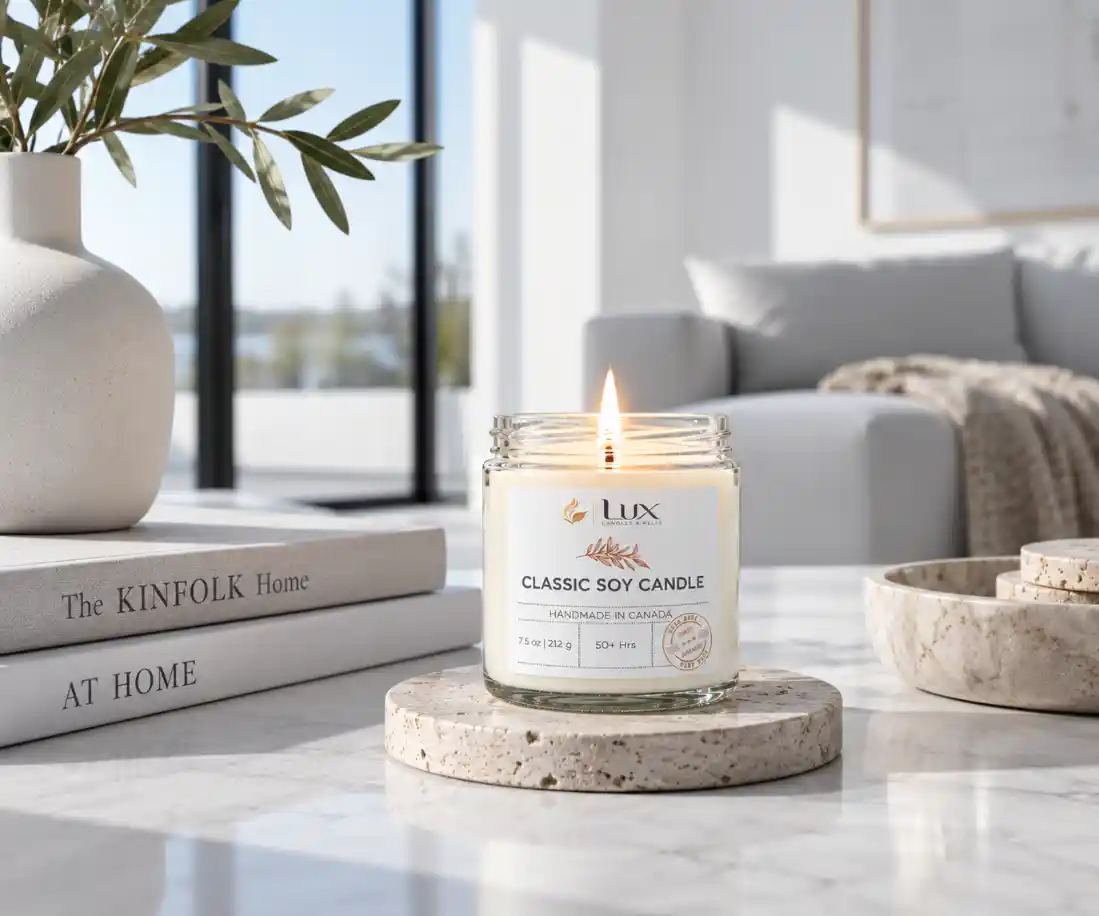
For a simple glow without added scent, explore our Unscented Classic Soy Candle. If you prefer scent without lighting a wick, you may also enjoy exploring wickless candle options used with a compatible top-down candle warmer. Wickless products should still be used according to their warmer and product instructions.
The takeaway
A thoughtful candle purchase is about transparency, personal scent preference, craftsmanship and safe use—not sweeping promises. At Lux Candles & Melts, we love the everyday warmth that soy candles bring to a space. Explore our Canadian soy candle and wax melt collections to find the style that suits your home.
For further reading: National Candle Association candle guidance and research on candle emissions during stressed burning.